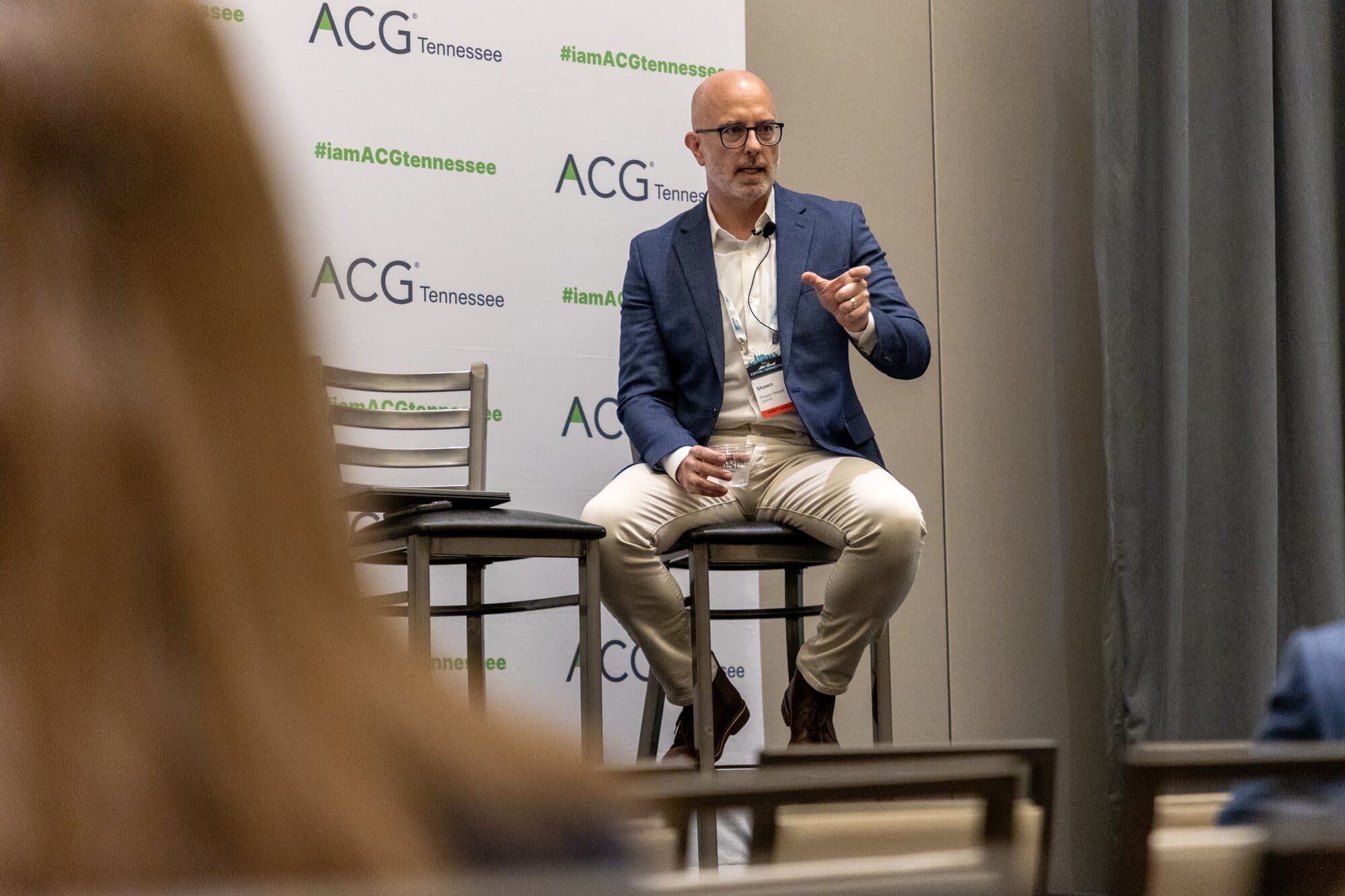
I joined Oliver Davis of Polsinelli for a fireside on AI in M&A at ACG Tennessee’s Mid-South Capital Connection. The room was a mix of professional services firms and the PE and M&A advisors who price them.
Oliver opened with a line that stuck: “Most of what a professional services firm does is white-collar manufacturing.” He went on to say that what a client actually buys is trust.
A firm that uses AI to bill hours faster has done the easy thing. A firm that uses it to change what it sells is a different business with a different multiple.
AI is good at the manufacturing part, the repeatable production a firm can systematize. It does nothing for the trust. And it won’t, not for a deal, where people still want to shake a hand on a decision of that magnitude. The firms getting this right are routing AI into production and spending their people on judgment and relationships, which is what the client was paying for in the first place.
That split is starting to show up in price. After the panel, two M&A strategists from the PE side told me the same thing, separately: firms that move on this will be valued differently from firms that don’t, and the gap won’t be small.
That isn’t bravado. Bain’s November 2025 analysis on tech services puts business-as-usual at about 30% revenue erosion and a 45 to 50% enterprise value loss over five years. Bain’s diligence guidance tells buyers to ask one question about a services company: who captures the AI efficiency gains, the firm or its customers? The public deal record still trails the advisory literature, the way it did with cyber diligence five years ago.
The valuation question is just the deal-table version of a broader argument. AI is already compressing margins faster than partners can re-price. Venture money is funding the workflows firms still sell by the hour.
The firms with a window are the ones deciding what to sell differently before the market decides for them.